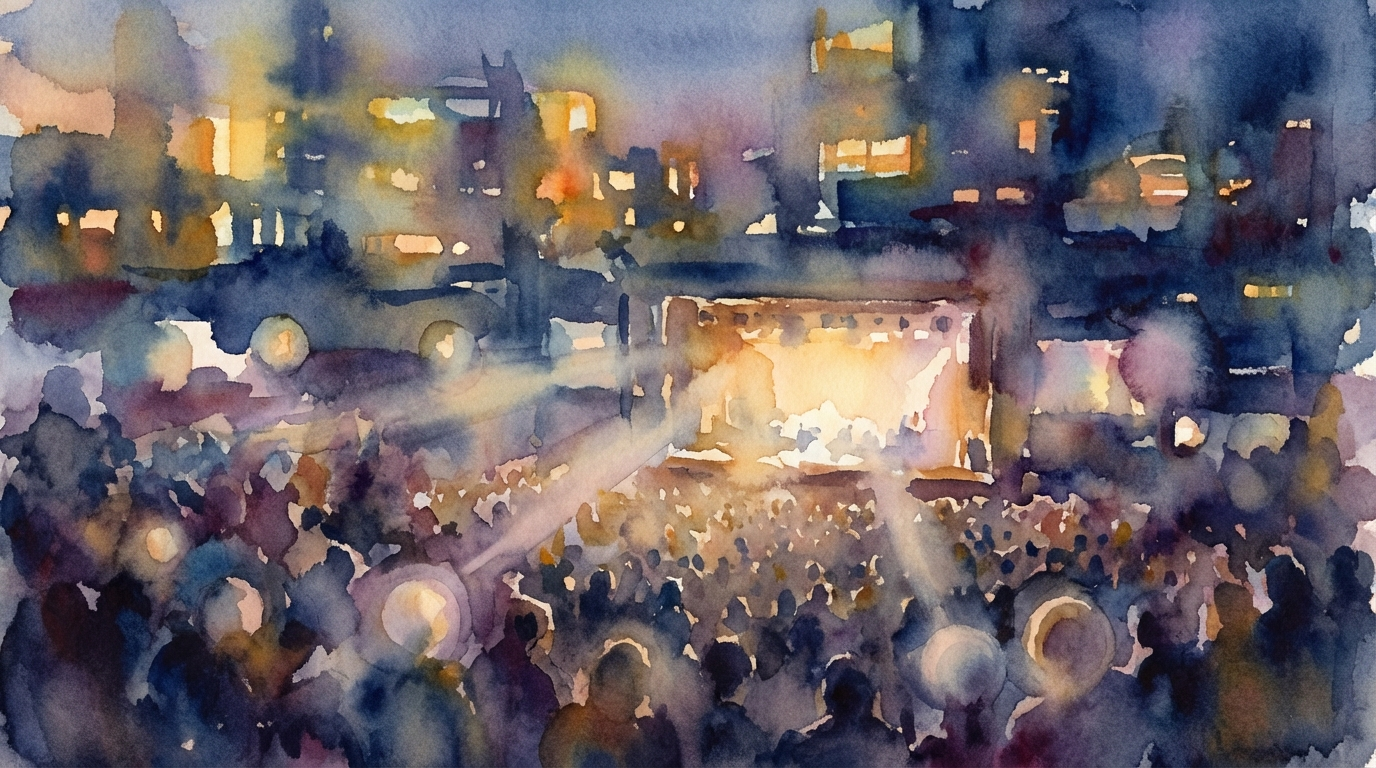
The Concert
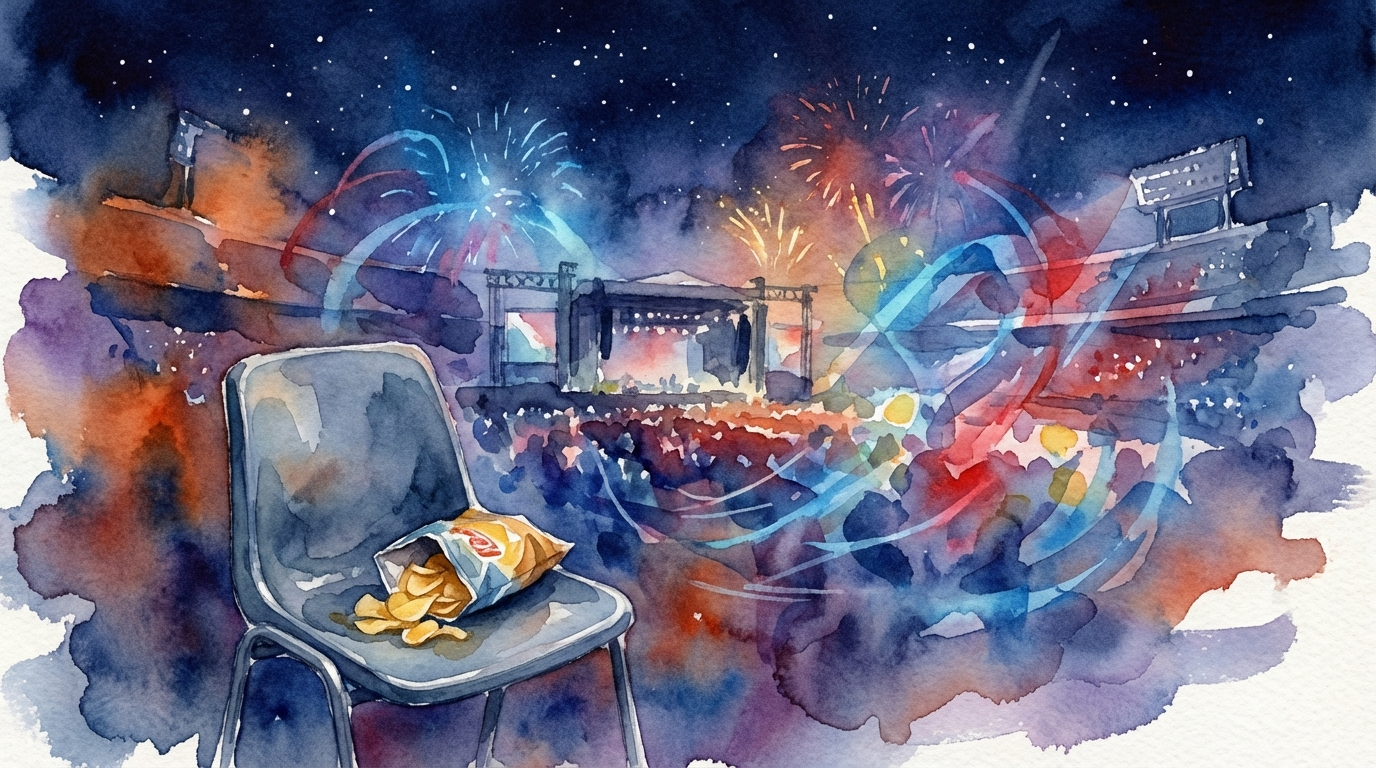
Last night, halfway through an Ed Sheeran concert in Sydney, slouched in a plastic chair, eating potato chips, I realized I was meditating.
Not intentionally. Not in any way I would have recognized even a few hours earlier. The music was loud, too loud, and flashing lights swept across seventy thousand people packed into the open-air stadium at Sydney Olympic Park. Someone was talking behind me. People were standing in the rows ahead. My partner sat beside me, absorbed in the music. Above us, the sky was clear and wide, scattered with stars, occasionally interrupted by fireworks that no one had warned us about.
It was not a meditation environment. It was, by every measure I've spent the last decade carefully curating, the opposite of one.
I've been meditating actively for more than ten years. And over those years, I've built an infrastructure around the practice that I didn't fully notice until that night. The quiet room. The specific lighting. The temperature set just so. The right posture, the right clothes. Not eating beforehand. A particular time of morning when the world hasn't yet started asking things of me.
I've treated presence like something that requires preparation. A runway that needs to be cleared before the thing itself can land. And I don't think that care was wrong. It taught me a great deal. But sitting there in that stadium, chips in hand, shoulders rounded, I started to wonder whether the infrastructure had quietly become something else.
Whether the ritual of creating the perfect conditions had, at some point, become a subtle form of control. Another thing to get right. Another way of telling myself that presence is fragile and needs protection.
Because there I was. In the loudest, most chaotic, most imperfect environment I could imagine. And something had opened.
I tried to understand why. What was different. And then I noticed what wasn't there.
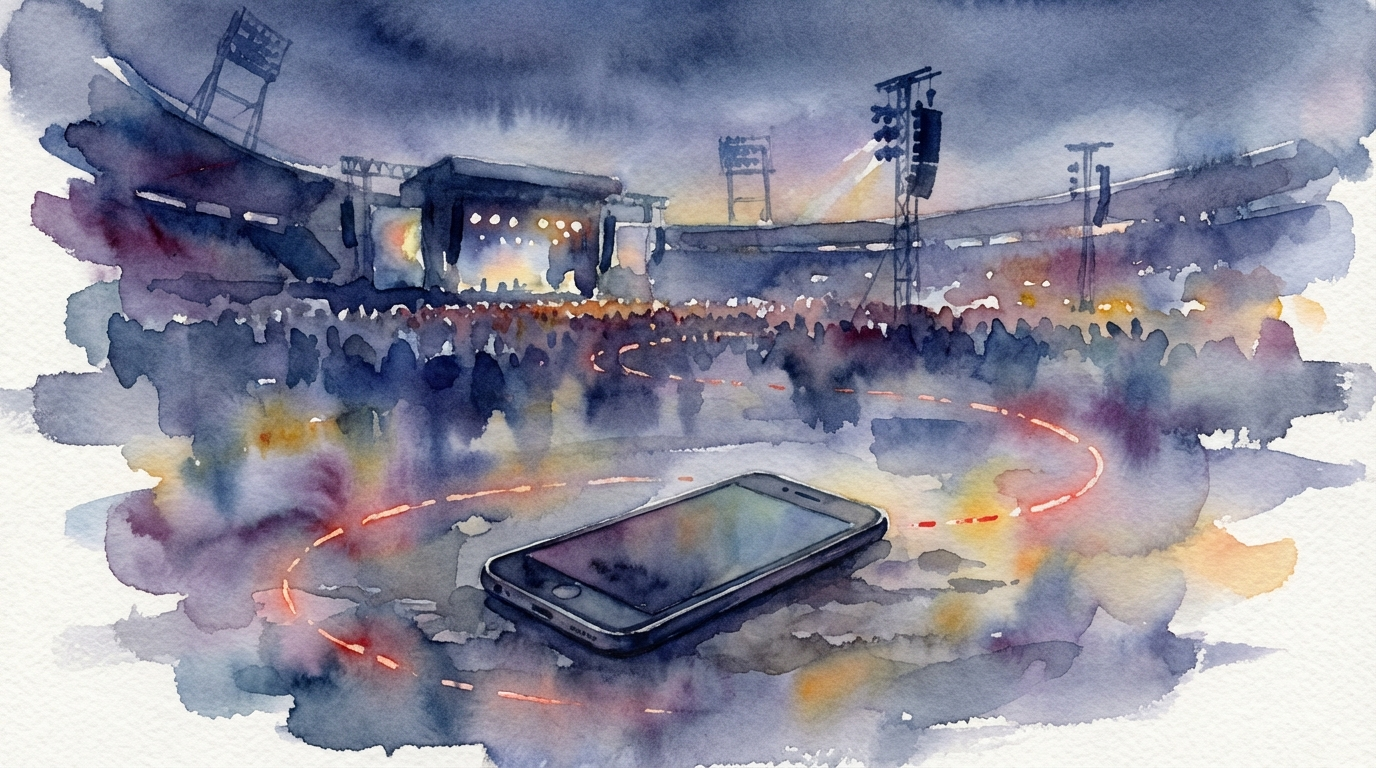
My phone. I'd reached for it a few times during the show, out of habit, the way my hand sometimes drifts to my pocket without instruction. But there was no signal. Seventy thousand people, all trying to use their phones at once, and the network had simply given up. So I put it away. Not with intention. Not with the quiet pride of someone choosing to unplug. I put it away because it was useless.
And without my phone, the exits closed. There was no scrolling, no checking, no drifting into a feed. No quick message to send, no notification to glance at. My partner was focused on the music, so there was no conversation pulling me sideways. I couldn't really move. The music was too loud to think over, too constant to resist. There was, quite literally, nothing else to do but be there.
It struck me that this is what a monastery does. It removes the distractions by design, by architecture, by schedule. The concert had done the same thing, entirely by accident. The doors were different, but the room I'd arrived in felt remarkably similar.
The loudness itself became a kind of silence. At first, the volume felt like an intrusion. But after a while, the wall of sound stopped being something to listen to and became something to rest inside. There was nothing to scan for, nothing to track.
My mind, which usually fills quiet spaces with its own noise, had nothing to compete with. It surrendered. The way it sometimes does near the ocean, or in heavy rain. Not because the sound stops, but because the sound becomes so total that the mind stops trying to manage it.
I thought about my mornings at home. The careful quiet I build. The deliberate stillness. How, even in that silence, my mind is often louder than Ed Sheeran's speakers. How sometimes the quietest room is the noisiest place I know.
And here, in the loudest place I'd been in years, the noise inside had gone almost completely still.
Ed Sheeran stood on that stage with a guitar and a loop pedal. Seventy thousand people. Relatively simple production compared to the concerts I've seen with towering sets and elaborate choreography. Just a person, a few tools, and a voice. There was something in his simplicity that mirrored what I was discovering in the audience.
He didn't need much infrastructure either. And watching someone do so much with so little made me wonder what else I might be over-engineering in my own life.
Seventy thousand people, all facing the same direction. All hearing the same songs. But each, I imagine, somewhere entirely their own. There's a particular kind of solitude that exists in a crowd, a way of being alone that doesn't carry the weight of loneliness. You're held by the presence of others without being asked to perform for them.
Nobody needed anything from me. Nobody expected conversation or connection or even eye contact. I was free to simply sit inside my own experience, surrounded by thousands of people doing exactly the same thing.
The concert didn't teach me a new technique. It showed me something I already knew but had buried under years of careful preparation: that I am capable of being exactly where I am, without any infrastructure at all.
I just have to stop leaving.
It's not that I need to choose to be present. It's that I need to stop choosing not to be.
We drove home that night through Sydney's quiet streets, the ringing in my ears slowly fading. My partner was talking about her favourite songs from the set. The city was lit up and alive around us. I noticed, briefly, that I wasn't reaching for anything. Not my phone, not a thought, not a plan for tomorrow.
I was just there. In the car. In the night. In the echo of something loud that had somehow taught me something about silence.