Plus One
Curiosity doesn't always read the script
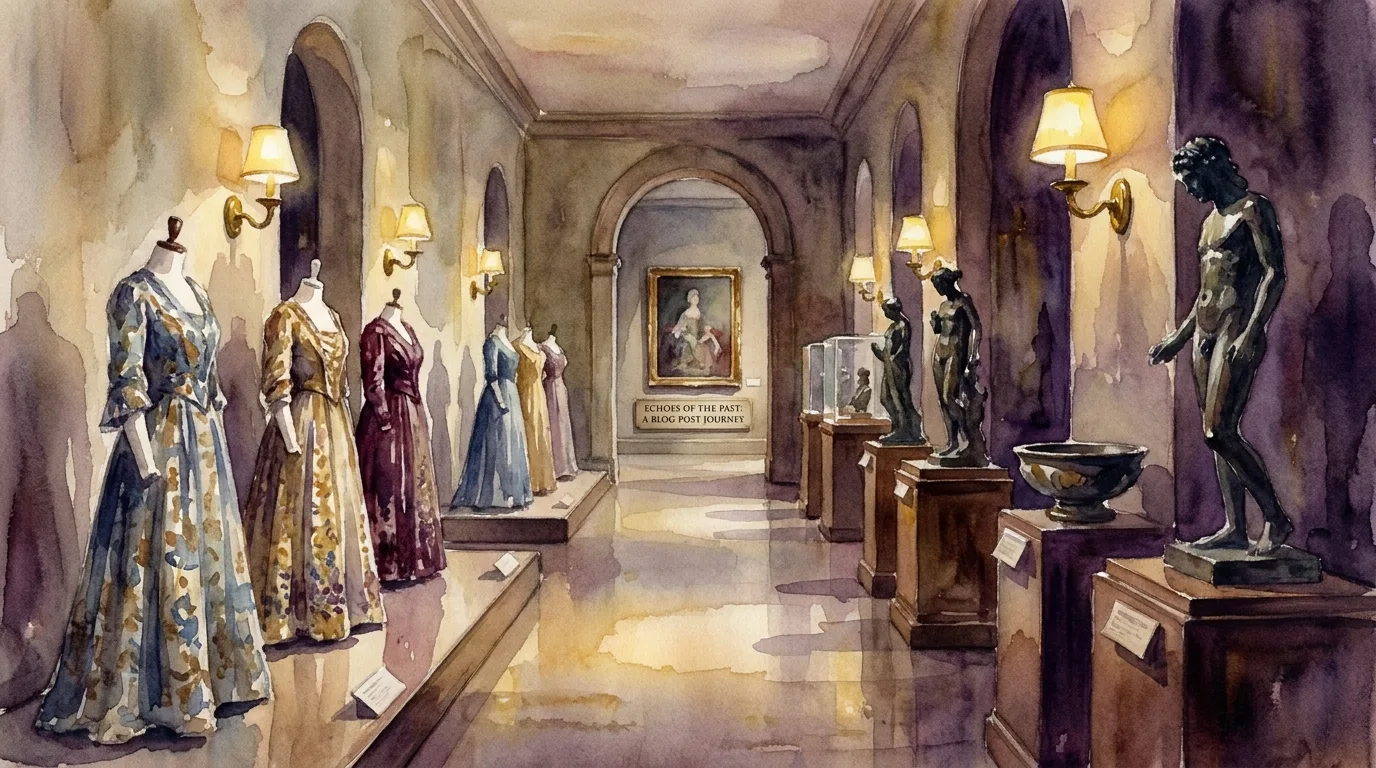
The invitation came and I said yes because I imagined my wife might enjoy it.
An art gallery in Lisbon, an exhibition she wanted to see, and would I come along. I said yes because she might want to go. I didn't expect much of myself in that room. I was there to be there.
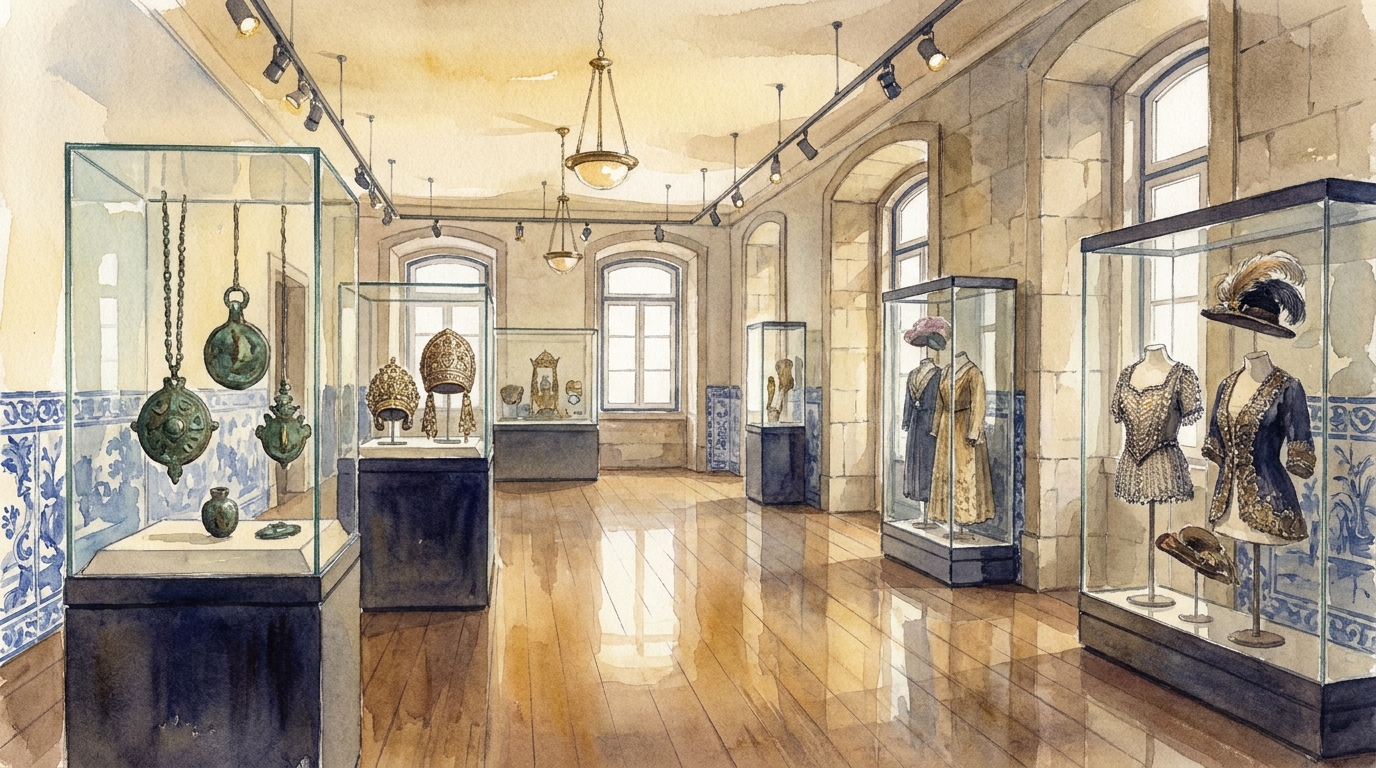
The collection belonged to an Armenian businessman who had spent his life gathering artefacts. Six thousand pieces, some of them three thousand years old. The curators had paired his collection with haute couture across different eras, letting the gowns and the relics speak to each other. A bronze pendant beside a beaded bodice. A ceremonial headpiece beside a feathered hat. The fabric and the metal in conversation across centuries.
We took the guided tour. Within twenty minutes I noticed something strange. I was the one leaning in. I was the one asking questions. My wife was enjoying it the way she had expected to enjoy it, walking through, taking it in. I was somewhere else entirely.
One name kept appearing in the guide's commentary. Charles Frederick Worth. An English designer who set up shop in Paris in the 1850s. I had never heard of him. By the end of the tour I couldn't stop thinking about him.
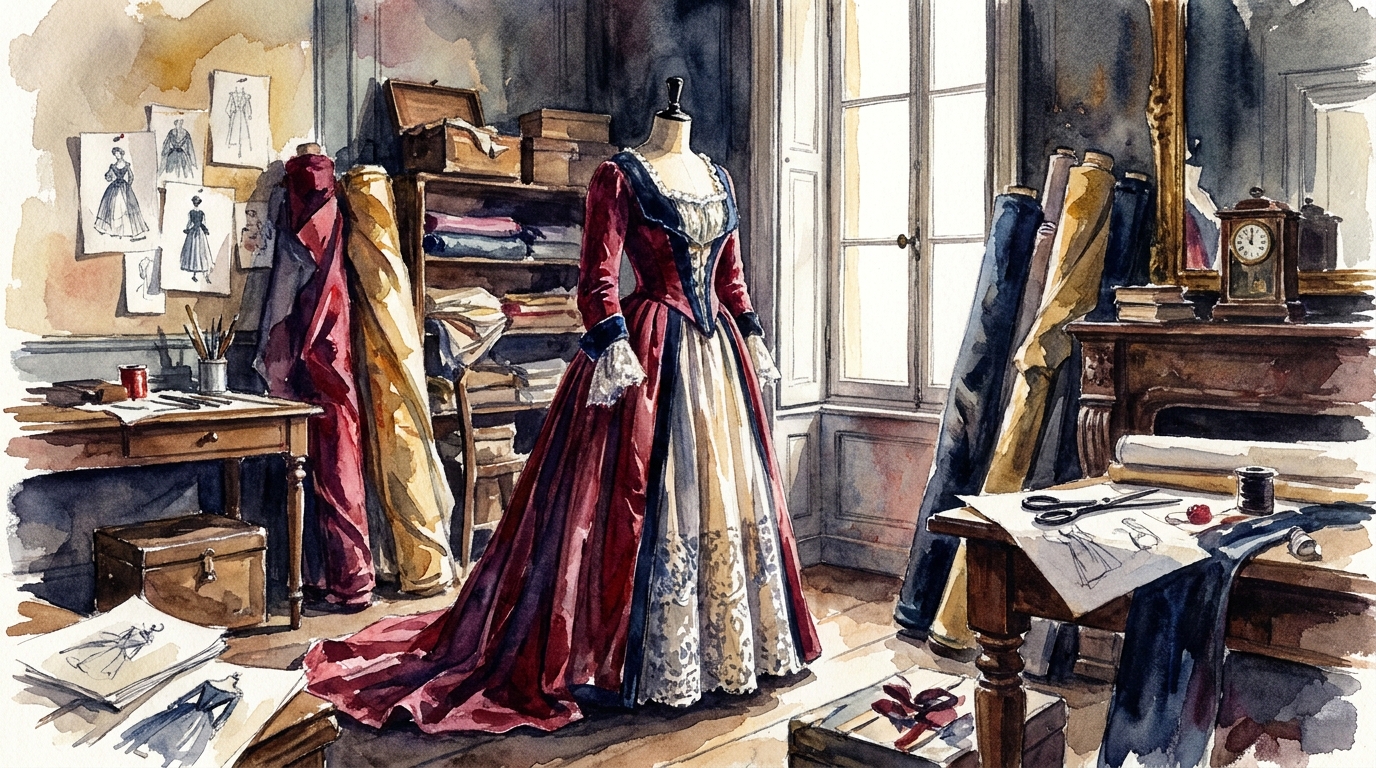
Worth didn't just make beautiful clothes. He redesigned the entire system around how creative work got made. Before him, dressmakers traveled to wealthy clients and executed their wishes. He flipped it. Clients came to his salon to see what he had designed. He sewed labels with his name into the garments, treating clothing as authored work. He introduced seasonal collections shown on live models, the first version of what would become the modern fashion calendar.
The fashion industry as we know it was largely invented by one person in the 1850s. He probably had no idea.
What struck me about Worth, standing there in front of his gowns, was that his vision wasn't aesthetic alone. It was structural. He looked at an entire industry and saw the script everyone was following. Dressmaker as servant. Garment as anonymous object. Clothing as one-off commission. Each of those was a story the field had told itself for so long it had become invisible. Worth saw the script as a script. And then he wrote a different one.
I had assumed I was at the gallery as a plus one. The story I told myself was that my wife was the one with the interest, and I was the warm body next to her. But the room had revealed something different. Something in me had been waiting to be lit up by exactly this, by the courage of a person who looked at an entire system and decided it could be redesigned.
The parallel landed quietly while I was still in the room. Worth had almost not existed, in a sense. He could have spent his life making dresses inside the existing system, executing other people's wishes, and we would never have heard of him. He became Worth because he stopped reading the script his industry had handed him.
I had almost not seen Worth. I had walked in with a script of my own. That's not for me. I'm not really into that. That's more her thing. If I had followed it more obediently, I would have drifted through the rooms and left with nothing. The exhibit would have happened to my wife and not to me.
I think about how often I've done this. Walked into rooms with a story already written about who I am in them. The networking event where I'm a founder. The dinner where I'm a husband. The conference where I'm an author. Each role comes with a script for what should interest me. Most of the time, I follow it without noticing it's a script.
But curiosity doesn't always read the script. Sometimes it just shows up.
I've spent most of my adult life building things. A company for fifteen years. Books. New projects now. What caught me about Worth, what made me lean in while my wife took the tour at her own pace, was the recognition of a particular kind of vision. Not the vision to make a beautiful object. The vision to see the system around the object and ask whether it served the work.
That work requires seeing past the conventions everyone else has accepted. It requires the willingness to be wrong in public. And it requires a strange relationship to time. Worth couldn't have known that the labels he sewed into his gowns would become the foundation of a global luxury industry. He just made the choices that felt right to him, drop after drop into a pond whose far edge he would never see.
The same muscle, I realised, was at work in both places. Worth saw past the script of his industry. I had almost not seen past the script of my afternoon. The scale was incomparable. The movement was the same. Noticing the story you're inside, and choosing whether to keep telling it.
I walked out of the gallery into the Lisbon afternoon, the light soft against the buildings. My wife asked what I had thought. I told her I had loved it more than I expected. She smiled. She had known, I think, before I had.
The unlearning wasn't about fashion. It was about how often I miss the thing in the room because I came in already knowing what I was going to find.